India: A populous country in South Asia
India, full name Republic of India, is the largest country in the South Asian subcontinent. As of 2016, India's total population was 1.326 billion, with the main ethnic group being the Hindustani, accounting for about 46.3% of the total population. The local religions are mainly Hinduism, Sikhism, Islam and Buddhism.
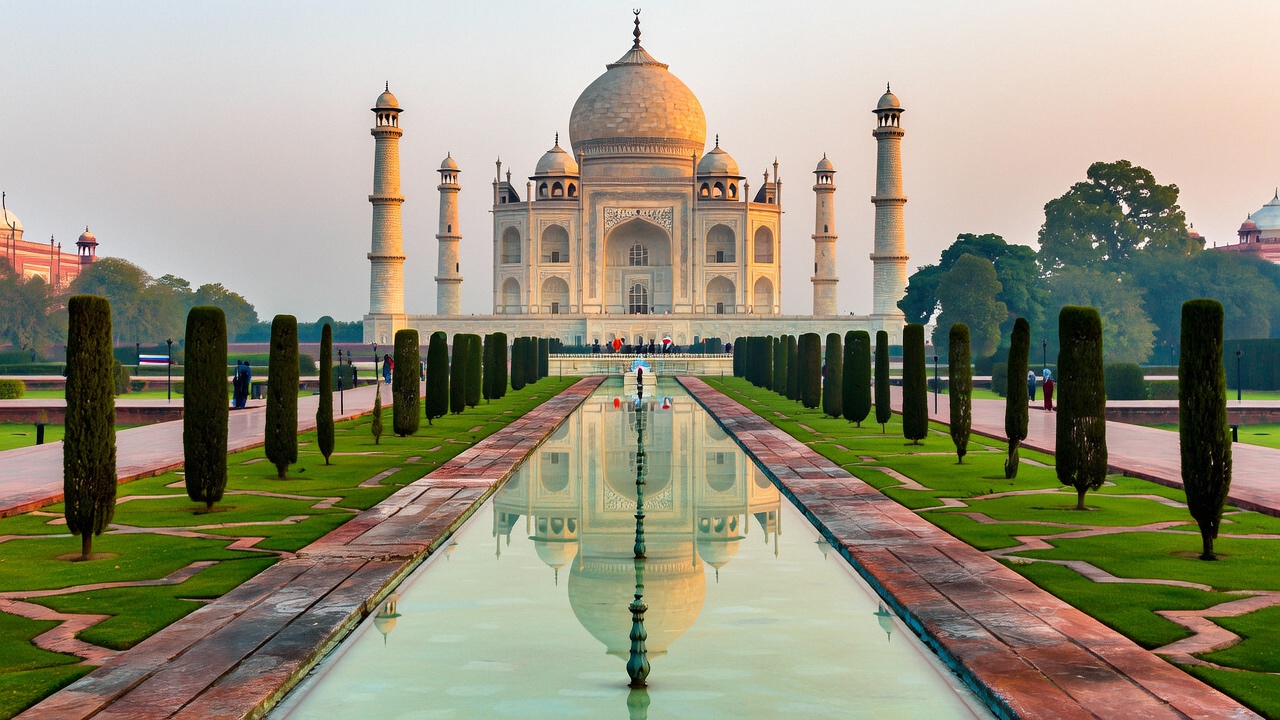
India, full name Republic of India, is the largest country in the South Asian subcontinent. As of 2016, India's total population was 1.326 billion, with the main ethnic group being the Hindustani, accounting for about 46.3% of the total population. The local religions are mainly Hinduism, Sikhism, Islam and Buddhism.
Game Content Avoidance Guide
In India, games should avoid the following sensitive content:
1. Obscene content
2. Content that is a major offense to people in a particular group/community or may cause hatred between such people
3. Content that insults India or its sovereignty
1. Obscene content
a. Evaluate whether the content is obscene:
● Any content that may corrupt a person's morals will constitute obscene material in India
● Women should not be portrayed in an obscene or derogatory manner. Depictions of women who are naked, engaging in sexual acts, being degraded or engaging in provocative behaviour (e.g. provocative dancing or striptease) may constitute representations of women in an obscene manner
Examples of complaints in India relating to obscenity include:
Case 1:
Complaints were made against the depiction of women in games such as God of War, Dante’s Inferno and Beowulf
Case 2:
Nude photos of tennis player Boris Becker with his fiancée (intended to protest apartheid and promote interracial marriage)
Case 3:
An Indian film depicting a woman staying with her cheating husband and even caring for him and his mistress when he is ill was seen as derogatory in India and objected to for depicting women as servile. A magazine cover featuring a mother breastfeeding her child was also objected to as being obscene.
"Obscene" is a very broad and undefined term under Indian law, so avoid portraying anyone in an obscene or derogatory manner.
b. Manage risk for obscenity:
● If you have questions about whether the game content is obscene, ask yourself the following questions:
● Would the content be considered pornographic?
● Would parents feel comfortable letting their children see or learn about the content?
○ Is there nudity involved?
○ Are sexual acts depicted?
○ Are sexual acts simulated?
● Can the content be uploaded to social media such as Facebook or Instagram?
c. Avoid explicit descriptions of sex and nudity in game content.
Fully clothed characters are generally low risk, while game content that contains nudity may be high risk. When it comes to obscenity, there is no clear line between high and low risk, as anyone can file a complaint about obscenity.
Other content to avoid:
● Game scenes such as strip clubs and open-air beaches
● Contact with prostitutes in the game plot (such as in games such as Grand Theft Auto 5)
● Describe scenes of child abuse or child sex
● Child pornography or discussions around this topic
● Physical attacks on women for entertainment (aggression related to the game's storyline or narrative content is not necessarily considered obscene content)
● Dismembering the character's body after being killed in the game
● Animal abuse or bestiality
● Describe or allow sexual assault in the game plot
● Voyeurism or sexual acts as game goals or tasks
● Avoid excessively bloody and violent images
2. Content that is seriously offensive to people in a specific group/community
a. Criteria for determining offense:
● Content that may be considered disrespectful to a religion or intentionally insulting religious feelings
● Behavior that causes hostility between different groups based on religion, caste, ethnicity, etc.
● Any behavior that intentionally arouses religious feelings or insults someone's religious beliefs
Examples of content that has caused controversy in India include:
The Killer 2: Silent Assassin
Contains a level set in a temple that resembles the Golden Temple in Amritsar, which has been objected to by the Sikh community
SMITE and Overwatch
Descriptions of Hindu mythological figures such as Kali and Devi have sparked protests. The depiction of these mythological characters in the game and their controllability is deeply offensive to some people.
b. For depictions of actions or storylines that may cause hostility between different groups, the following should be avoided:
● Descriptions of the destruction of any religious figures/idols/places of worship, especially by members of different religions/groups
● Avoid mentioning or recreating any sensitive historical events that have led to unrest or conflict between communities or different groups. References to events such as the demolition of the Babri Masjid, the Kargil war or other recent wars, the Anti-Sikh Riots, the Gujarat Riots, etc. should be completely avoided
● Avoid depictions of characters being humiliated or degraded based on their caste, ethnicity, or sexual orientation. (Example: homophobic or racist slurs in game dialogue)
● Destroying or insulting any religious book or text such as the Quran, Bhagavad Gita, the Bible, etc.
● Killing or dismembering cows, elephants, monkeys, or other animals revered in India. Cows are considered sacred in Hinduism, and the Hindu gods Ganesha and Hanuman are depicted as having the face of an elephant and a monkey respectively
● Killing, dismembering, or mocking tigers or peacocks. The tiger is the national animal of India, while the peacock is the national bird of India
● Characters with images, personalities or voices similar to any religious, sports or cultural figures of India, whether living or dead
3. Content that insults India or its sovereignty
a. Avoid involving India's national symbols and emblems
1. Avoid insulting, mocking or destroying India's national symbols and emblems, such as the Indian flag, state flag or national emblem (such as the Ashoka Lion). Derogation of these national symbols or emblems will be strongly resisted.
b. Avoid involving Indian maps
Real maps are prone to sensitive territorial disputes. It is not recommended to involve real country names, place names, and map-related descriptions in the game.
c.Avoid involving the Indian government and politicians/political parties
Any behavior or description that can be seen as arousing hatred or dissent against the ruling government of India should be strictly avoided:
● Discrediting or criticizing any specific political party/politician/implemented political policy will also cause trouble.
● Netflix's series "Sacred Games" has a character who described a former Indian prime minister in insulting and derogatory language, which resulted in protests in India.
Punishment
The following acts are criminal offences in India, each punishable by fine or imprisonment. Fines range from INR 2,000 to INR 1,000,000 for different offences, and up to 5 years in prison for serious offences:
● Distribution, publication and promotion of obscene material. Indian law defines obscenity as "any article/presentation that is lewd or caters to obscene tastes".
● Arousing or attempting to arouse hostility between different groups on the basis of religion, race, caste, etc.
● Any act intended to outrage religious feelings or insult the religious beliefs of any person.
● Anti-obscenity laws are very broad and apply to most persons involved in the creation, distribution and publication of content, including those who are involved in the business or profit from the business and who have reason to believe that obscene material will be disseminated or published, etc.
● Electronic publication or dissemination of obscene material is also punishable under India's information technology laws.
● India has also enacted specific laws that strictly prohibit and punish any inappropriate, derogatory or slanderous representation of women in any form. Also, portraying anyone in an obscene or derogatory manner may violate anti-obscenity laws.