Complex Overseas DSR Rules
Privacy protection requires not only safeguarding user personal information but also addressing user requests for data subject rights ("DSR"). Driven by privacy regulations like the European GDPR, data subject rights have evolved from theoretical concepts into obligations that have a tangible impact on businesses' daily operations.
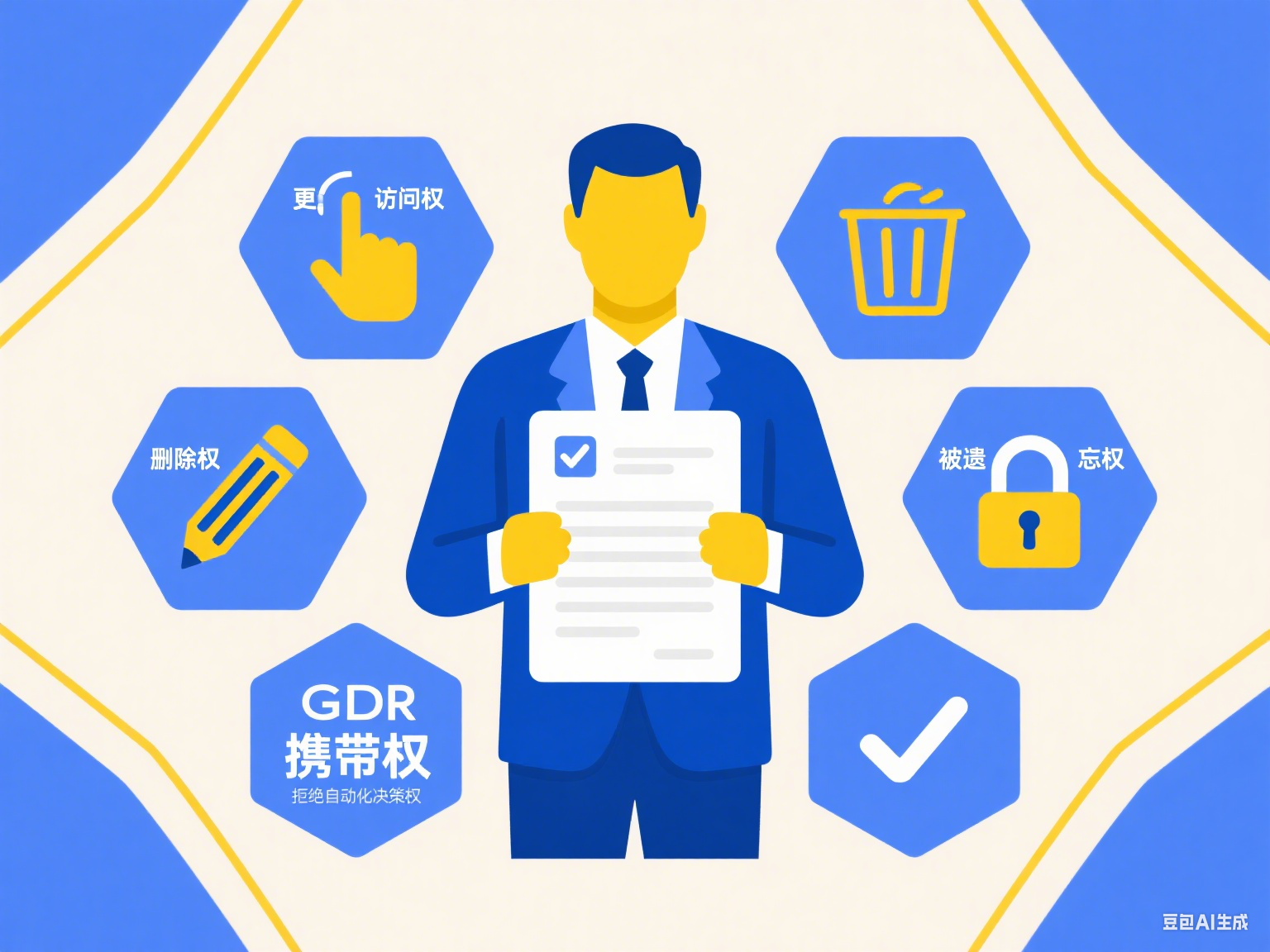
Privacy protection requires not only safeguarding user personal information but also addressing user requests for data subject rights ("DSR"). Driven by privacy regulations like the European GDPR, data subject rights have evolved from theoretical concepts into obligations that have a tangible impact on businesses' daily operations. For companies expanding overseas, effectively handling user DSR is not only a matter of legal compliance but also directly impacts the trust they maintain with their users. This article will delve into the core meaning, implementation challenges, and best practices of data subject rights, as well as the new challenges app developers face in handling DSR, and offer recommendations for optimal DSR solutions for overseas products.
User DSR Rights Under Overseas Laws 101
The data subject rights established by the GDPR provide users with "full control" over their personal data, redefining the relationship between data processors and their data subjects, and returning the final say in the processing of their personal data to users.
The right to be informed is the starting point of the data subject rights system. The GDPR requires data controllers (app developers) to disclose comprehensive data processing information to data subjects (i.e., users) in a transparent and understandable manner before and after collecting personal data. This includes, but is not limited to, the underlying processing purpose, legal basis, data retention period, recipient information, and data source. This also means that app developers must clearly explain key data processing information when receiving user inquiries.
Another core data subject right is the right of access, which grants users the right to obtain a copy of their personal data. In the context of gaming apps, this goes beyond simply copying game records, social media data, and transaction records; it requires full disclosure of all information held by the data controller about the user. Other data subject rights, including the right to rectification, erasure, and restriction of processing, further provide individuals with dynamic control over their data.
App Developers' Legal Obligations
As data controllers, app developers must establish a comprehensive data subject rights response mechanism to fulfill their legal responsibilities. The GDPR requirement that companies comply with DSRs within one month of receiving a user's request may seem simple, but in practice, it presents challenges. This deadline begins on the day the request is received, not from the start of processing the request or completion of identity verification. For complex requests or multiple requests from the same user, businesses may extend the timeframe by up to two months, but must notify the user of the reason for the extension and provide a new expected completion timeframe within the first month.
Authentication is a critical step in enforcing data subject rights, and data controllers must strike a balance between protecting data security and avoiding excessive requests for user information. For apps, this may involve confirming user identity through various methods, such as in-app account systems, email verification, and two-factor authentication. However, verification requirements must not become an obstacle to users exercising their rights and must be reasonable and necessary. Deliberately raising verification thresholds with the intention of reducing the need to process DSRs may be considered a failure to fulfill the data controller's obligations.
While processing DSRs imposes additional compliance costs on businesses, in principle, businesses cannot charge users for processing DSRs unless the requests are manifestly unfounded or excessive. Therefore, app developers must consider the costs of responding to data subject rights as part of their operating costs and not pass them on to users.
Core Challenges in Enforcing Data Subject Rights
Many businesses face complex, multifaceted challenges in handling DSRs. Technical difficulties arise from the complexity of locating and extracting data. Gaming apps typically involve multiple data systems, such as user account databases, game logs, social interaction records, anti-cheating systems, and advertising analytics platforms. Quickly and accurately locating and extracting all relevant data for a specific user from these disparate systems requires not only significant technical investment but also a comprehensive data governance framework. Companies also need to ensure that the data provided is consistent with the information outlined in their privacy disclosures.
Another challenge is ensuring that all relevant systems, including those of third-party processors, are updated simultaneously when users request data corrections or deletions. This is particularly complex in the gaming industry, as game data often spans multiple partners, such as login services, advertising, data analytics services, and cloud providers.
An operational challenge lies in the frequent difficulty understanding and interpreting requests, as users may submit overly vague or broad requests, making it difficult for companies to determine which data should be included. Users may use a variety of terms to describe the data they request, often in different languages, requiring frontline teams to possess sufficient expertise to accurately understand and process these requests. These issues also require companies to better manage DSR handling, including planning to allocate sufficient personnel for communication with users, accurately track request processing, and provide adequate response training.
Establishing an Effective Compliance Mechanism
Building an effective data subject rights compliance mechanism requires systematic planning across multiple dimensions, including organizational, technical, and process. Within the organizational structure, establishing a dedicated data protection coordination point is crucial. This role is typically shouldered by the DPO or the group data compliance team (in Tencent's case, the Data Compliance and Privacy Department or Overseas Compliance Center) to coordinate the handling of complex DSRs. Because DSR handling often requires cross-departmental coordination, clear division of responsibilities and collaborative processes across multiple departments, such as legal, technology, customer service, and product, are crucial. Furthermore, companies should provide regular internal training to all involved employees to ensure that all relevant personnel understand the requirements of data subject rights and the response process, thereby improving overall response efficiency.
In terms of technical implementation, companies need to have a clear understanding of the storage location, processing purposes, and data flows of personal data within the organization. This is not only a technical prerequisite for handling DSRs but also the foundation for implementing other data protection measures. The use of automated tools can significantly improve processing efficiency and accuracy. Enterprises can rely on in-house systems or third-party DSR processing platforms to automate the entire process, from request receipt and identity verification to exercise. Automated processing typically requires a centralized request entry point, seamless integration with existing systems, multiple authentication methods, and secure data transfer mechanisms to enable automatic data deletion and export. This requires considering the technical requirements for DSR response during the product design phase and implementing privacy-by-design principles.
Regarding the processing process, standardized processes can improve response quality and consistency, including standardization of request classification, identity verification, data collection, internal review, and exercise. Preparing standardized response templates not only improves efficiency but also ensures the completeness and accuracy of response content.
Consider the technical requirements of data subject rights during the product design and development phase, adopt data minimization principles, and reduce unnecessary personal data collection. Anonymizing data whenever possible can fundamentally reduce processing activities involving personal data. Clearly explaining data processing activities and user rights in the privacy policy, using simple and understandable language, can enhance user understanding and trust, reducing the likelihood of users initiating inquiries.
Trends in Enterprise DSR Processing – Automated Exercise; Providing an Exercise Interface for Users on Apps
In the AI-driven era, leveraging AI and other automated technologies to handle DSRs has become a new trend. Companies are aiming for end-to-end automated processing, reducing manual intervention, processing time, and the risk of human error.
For example, the popular mobile game Clash Royale provides users with in-game data access and account deletion features, along with automated exercise:
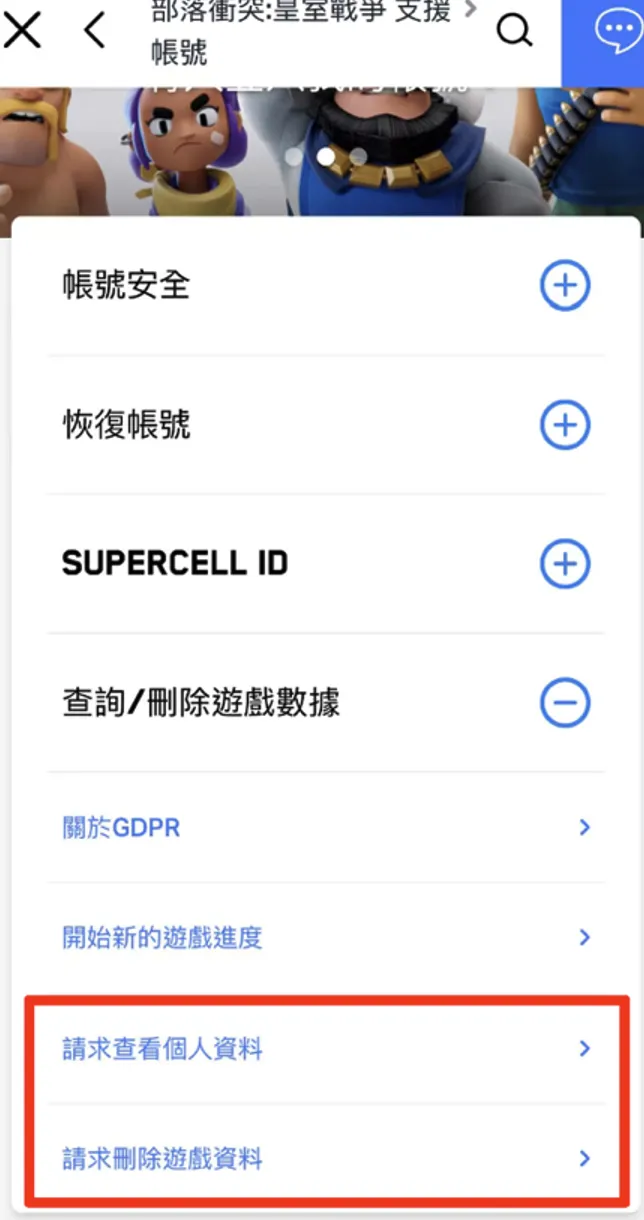
Providing dedicated online forms to easily submit various types of DSRs and integrating self-service exercise functionality within apps, allowing users to manage their personal data directly within the game interface, are common practices. This in-app exercise functionality not only facilitates users but also reduces the administrative and direct processing workload for companies, thereby mitigating the risk of violations due to failure to complete exercise within legal time limits.
Since DSR processing requires verifying the identity of the initiator, DSR collection channels that facilitate identity verification can significantly improve processing efficiency. For example, collecting sufficient identity verification in a user's login environment or through online forms can expedite the processing process and avoid collecting additional or unnecessary personal information.
The above are all direct approaches to addressing DSRs. To enhance transparency, many companies have provided users with a centralized portal for all privacy-related information through privacy and trust centers. This allows users to better understand the data processing activities involved in using related services, fostering trust in the services and reducing the incentive to file DSRs.
Emerging Challenges and Future Developments
Malicious and abusive user requests are becoming a new challenge for companies. However, a recent European Court of Justice ruling indicates that simply having a large number of requests does not constitute "abuse"; companies must demonstrate clear intent to abuse. This ruling sets a higher standard of proof for companies to identify and address malicious requests.
Furthermore, the widespread use of large AI models has raised new technical challenges for data subjects' rights. Because the training data for large models often contains a large amount of information, including personal information, achieving "machine forgetting" in large models is technically extremely difficult. Therefore, from the perspective of addressing DSRs, user requests to correct or delete their data may be difficult to implement. Until effective technical means are available to accurately remove data, companies should avoid using personal information to train models. Regulators around the world are also aware of this issue and are exploring effective data minimization and anonymization in large model training. Regulatory authorities in Hong Kong and Macau have also recently issued relevant guidelines (https://www.pcpd.org.hk/tc_chi/resources_centre/publications/files/ai_protection_framework.pdfhttps://www.pcpd.org.hk/tc_chi/resources_centre/publications/files/ai_protection_framework.pdf).
At the regulatory level, overseas law enforcement efforts have shown a significant strengthening trend. The European Data Protection Board's 2025 report noted that "inadequate fulfillment of data subject rights" has become the fifth most common type of violation, with over 200 related cases and total fines exceeding €100 million. At the same time, users' awareness of and willingness to exercise their data rights are increasing, leading to an increase in the number of DSRs that companies must handle. From a regulatory investigation perspective, it is relatively easy for users to initiate complaints and for regulators to determine whether violations have occurred. The most common enforcement case involves companies failing to properly handle requests within the statutory timeframe.
Finally, for app developers, data subject rights are not abstract legal concepts, and they cannot ignore their responsibilities in this area. Establishing a comprehensive data subject rights response mechanism is not only a necessary requirement for legal compliance but also a crucial foundation for gaining user trust and achieving sustainable development. Companies must strike the optimal balance between technological innovation and privacy protection. They should properly address DSRs by adopting privacy-by-design principles, deploying advanced automated tools, and establishing user-friendly mechanisms for exercising data rights. Respecting and protecting user data rights is not only a legal obligation for companies but also a crucial manifestation of their social responsibility and long-term value creation. In the process of building digital trust, data subject rights will play an increasingly important role, becoming a crucial bridge between technological progress and humanistic care.
DSR Handling Best Practices
1: Develop and improve DSR handling processes and standards.
2: All global product teams should promote the development of user self-service features to reduce the manpower required by business teams to handle DSRs after product launch.
3: Implement automated processing through system integration to reduce manual intervention and mitigate the problem of timeouts.
4: Standardize DSR handling processes, including how to handle common requests, required authentication information, user response text, and how to provide data to users. 5: Reduce reliance on processing methods that cannot be automated (such as traditional email collection of DSRs), and introduce strategies that facilitate user exercise and product team processing (such as self-service exercise within the app, DSR online forms, and skipping tedious identity verification processes through user login).